

Home / world / Europa / Svezia / Riso basmati bianco al vapore

Riso basmati bianco al vapore
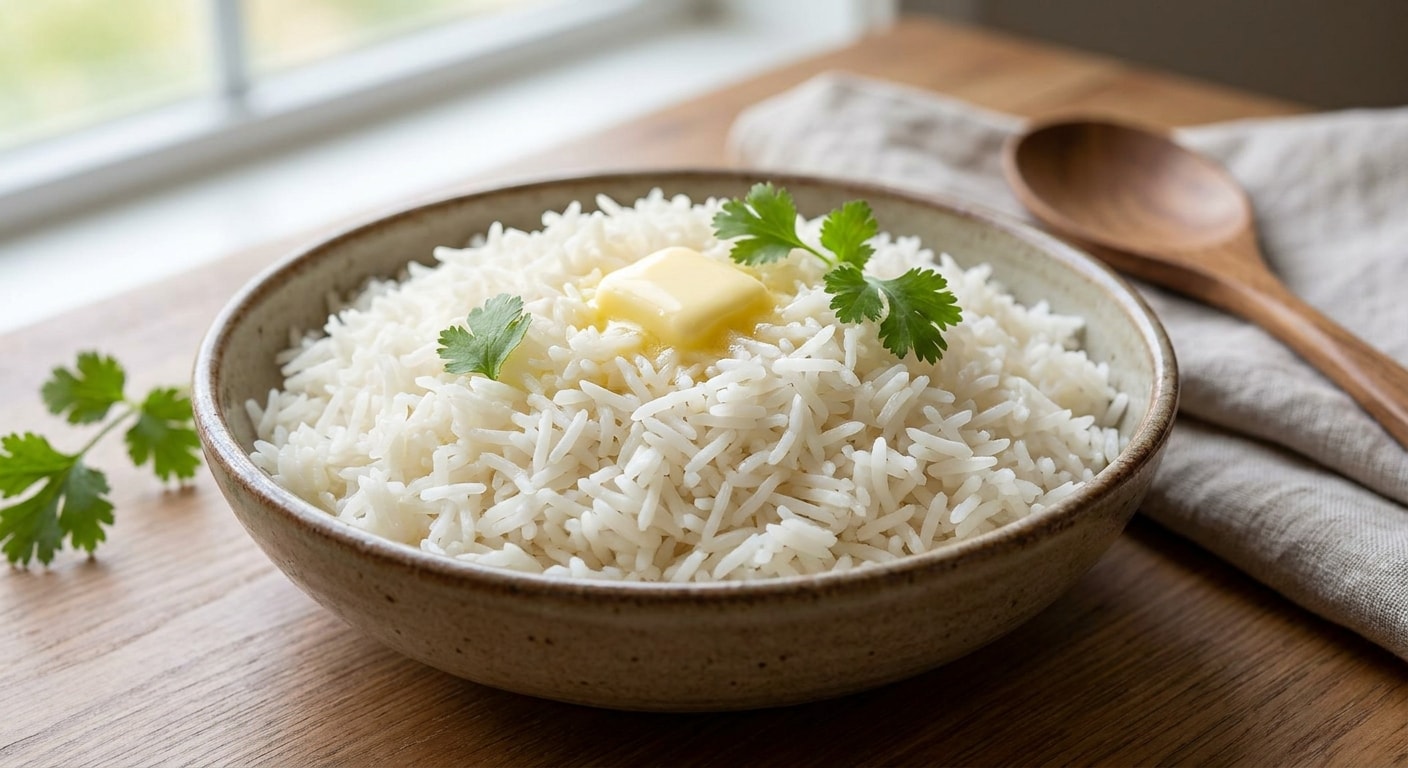
Riso basmati bianco al vapore
A 0 utenti è piaciuto questo alimento | 0 utenti hanno salvato questo alimento

Valori nutrizionali

Per porzione da 260 g

% Valore giornaliero basato su una dieta di 2000 kcal

Calorie 338 kcal
17% DV
Grassi totali 0.8g
1% DV
Grassi monoinsaturi0.2g
Grassi polinsaturi0.2g
Grassi saturi0.2g
Carboidrati totali 73.3g
24% DV
Fibre1.0g
Amido72.2g
Zuccheri0.1g
Proteine 6.9g
14% DV
Proteine vegetali6.9g

Informazioni

Una ciotola di riso basmati bianco cotto. È un alimento ricco di carboidrati, con pochi grassi, proteine moderate e fibre minime.

Ingredienti

Vitamine e minerali

Vitamine

NutrienteQuantità%VNREmivita
Biotina (B7)1.6mcg5%
Colina7.0mg1%
Folato (B9)4.0mcg1%
Niacina (B3)1.0mg6%
Acido pantotenico (B5)0.4mg8%
Riboflavina (B2)0.0mg2%
Tiamina (B1)0.1mg4%
Vitamina B60.1mg6%
Vitamina E0.1mg1%
Vitamina K0.2mcg0%

Minerali

NutrienteQuantità%VNREmivita
Calcio26.0mg3%
Rame90.0mcg10%
Ferro0.5mg3%
Magnesio31.0mg7%
Fosforo94.0mg13%
Potassio91.0mg2%
Selenio9.0mcg16%
Sodio120.0mg5%
Zinco1.0mg9%

Riso basmati bianco al vapore

Nota introduttiva


Questo è il piatto più semplice, e proprio per questo uno dei più rigorosi. Il basmati cotto correttamente deve risultare sgranato, fragrante e tenero senza disfarsi, con ogni chicco distinto ma completamente idratato. La disciplina sta nella moderazione: sale, acqua e riso gestiti con precisione.

Elementi essenziali della ricetta


  • Categoria del piatto: Preparazione di cereali

  • Cucina o origine: Asia meridionale

  • Tipo di portata: Contorno

  • Resa: 1 porzione

  • Dimensione della porzione: 260 g

  • Tempo di preparazione: 5 minuti

  • Tempo di cottura: 18 minuti

  • Tempo totale: 23 minuti

  • Difficoltà: Facile


  • Attrezzatura


  • Colino a maglia fine

  • Casseruola media con coperchio aderente

  • Forchetta

  • Bilancia


  • Ingredienti


  • Riso basmati bianco, 100 g

  • Acqua, 180 g

  • Sale, 2 g


  • Procedimento


  • 1. Metti il riso in un colino a maglia fine e sciacqualo sotto acqua fredda corrente per 30-45 secondi, muovendo delicatamente i chicchi con la mano finché l’acqua non inizia a risultare meno torbida. Lascialo sgocciolare bene per 1 minuto.


  • 2. Trasferisci il riso in una casseruola media. Aggiungi l’acqua e il sale. Mescola una sola volta per distribuire uniformemente il sale, poi metti su fuoco alto.


  • 3. Porta a ebollizione piena in 4-5 minuti. Non appena la superficie bolle vivacemente, copri bene, abbassa il fuoco al minimo possibile e cuoci per 12 minuti senza sollevare il coperchio.


  • 4. Togli la casseruola dal fuoco e lascia riposare, coperta, per 5 minuti. I chicchi dovrebbero terminare di assorbire l’umidità e diventare teneri, separati e completamente cotti.


  • 5. Scopri e sgrana delicatamente il riso con una forchetta, sollevandolo dai bordi verso il centro. Il riso finito deve risultare leggero, ben distinto e asciutto in superficie, senza acqua libera visibile.


  • Impiattamento e servizio


    Disponi il riso in un mucchietto leggero in una ciotola o in un piatto caldo, mantenendo i chicchi sciolti anziché compressi. Servi immediatamente, quando la consistenza è morbida, sgranata e pulita.

    Note professionali


  • Il risciacquo controlla l’amido superficiale e preserva la separazione dei chicchi; scola accuratamente prima della cottura.

  • Tieni il coperchio ben chiuso durante la cottura e il riposo. Il vapore fa parte del metodo, non è un accessorio.

  • Se il riso risulta leggermente sodo dopo il riposo, lascialo coperto per altri 2 minuti prima di sgranarlo.
  • VeganaVegetarianaSenza glutineSenza latticini
    Scarica su App Store

    Feel Better.

    OKKAI engine computes your next meal.

    OKKAI dashboard
    Food detail
    OKKAI engine

    One photo.
    Full breakdown.

    Point your camera at any meal — restaurant dish, homemade food, snack, smoothie. OKKAI identifies what you're eating and returns a complete nutritional profile in seconds.

    • ·Calories, protein, carbs, and fat — instantly
    • ·20+ vitamins and minerals estimated per meal
    • ·Works on any meal, any cuisine, anywhere
    • ·Ingredient breakdown with adjustable portions
    • ·Recipe generation from any logged food
    Food nutrition detail

    See what people
    are actually eating.

    Every meal logged by OKKAI users — from Stockholm to Seoul.

    Loading meals…

    Built for people who take
    nutrition seriously.

    Feature screenshot
    The OKKAI engine

    Your body keeps score.

    OKKAI ingests your sleep, exercise, food, weight, age, location and weather data. It breaks food down to its smallest compounds, computes vitamin and mineral half-lives, and models your body's current state as accurately as possible from all available data.

    The OKKAI engine keeps track of what cannot be seen.

    Computed every hour.

    Your body is never static. Vitamins deplete, minerals interact, absorption rates shift with activity and time of day.

    The engine recomputes every hour in order to give a suggestion on what to eat and when.

    Deep Apple Health integration.

    OKKAI reads from and writes to Apple Health — bi-directionally. Every meal pushes macros, vitamins, and minerals into your health record. Every workout and sleep session flows back into OKKAI's analysis.

    Works with Apple Health
    Bi-directional sync
    Certified integration

    Reads from Health

    • Steps
    • Active calories
    • Workouts
    • Weight
    • Sleep hours
    • Resting heart rate

    Writes to Health

    • Dietary calories
    • Protein, carbs, fat
    • Fiber
    • All 13 vitamins
    • All 10 minerals
    Apple Health integration screen

    What people on Instagram say.

    Instagram review
    Instagram review

    Coming very soon.

    OKKAI is launching on iOS shortly. Sign up for the waiting list and be among the first to track nutrition the way it should be tracked.

    Download on the App Store

    Common questions.

    You take a photo of any meal. OKKAI's AI identifies the food, estimates the ingredients, calculates calories and macronutrients, and estimates 20+ vitamins and minerals — all within a few seconds. You can then adjust portions or add ingredients manually.
    Yes — OKKAI tracks 13 vitamins (A, C, D, E, K, B6, B12, folate, and more) and 10 minerals (calcium, iron, magnesium, zinc, potassium, and more). After logging enough meals, OKKAI provides an in-depth analysis of your body's nutrient stores and tells you exactly which foods to eat to fill the gaps.
    OKKAI supports 30+ protocols: daily time-restricted eating (12:12, 14:10, 16:8, 18:6, 20:4, OMAD), multi-day (5:2, alternate day fasting), extended fasts (24h, 36h, 48h, 72h, 96h), and religious fasts including Ramadan. You can also run a custom fast for any duration.
    Yes — deeply. OKKAI reads steps, active calories, workouts, weight, sleep, and resting heart rate from Apple Health. It also writes every meal's calories, macros, fiber, and all micronutrients back to your Health record so your full nutritional data lives in one place.
    OKKAI is free to download. Core features — food logging, calorie and macro tracking, fasting, weight tracking, and Apple Health sync — are free. Advanced AI analysis including the full micronutrient breakdown and personalized recommendations is available with OKKAI Premium.