

 Spaghetti alla Carbonara with Pancetta and Parmigiano-Reggiano
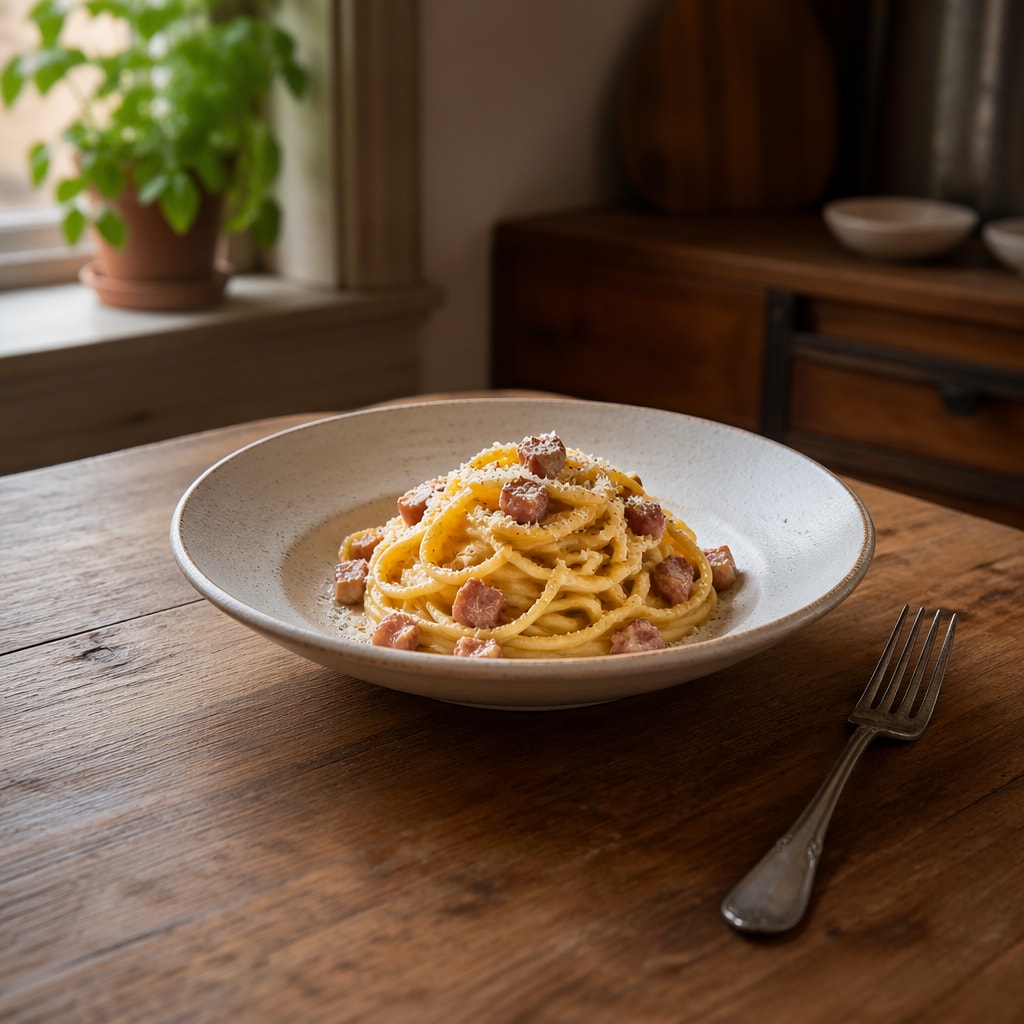
Logged by @hokkaido
Nutrition Facts
Per 290g serving
% Daily Value based on a 2000 kcal diet
Calories
620 kcal
31% DV
Total Fat
31.0g
48% DV
Monounsaturated Fat15.6g
Polyunsaturated Fat2.8g
Saturated Fat10.2g
Trans Fat0.2g
Total Carbohydrate
58.0g
19% DV
Fiber2.5g
Starch53.4g
Sugars2.1g
Protein
24.0g
48% DV
Animal Protein24.0g
About
A rich pasta dish with spaghetti coated in egg yolk and cheese, topped with pancetta and black pepper. High in refined carbohydrates and fat, with moderate protein primarily from pancetta, egg, and parmesan.
Vitamins & Minerals
Vitamins
| Nutrient | Amount | DV% | Half-life |
|---|---|---|---|
| Choline | 115.0mg | 21% | |
| Vitamin A | 180.0mcg | 20% | |
| Vitamin B1 | 0.3mg | 23% | |
| Vitamin B12 | 0.8mcg | 33% | |
| Vitamin B2 | 0.3mg | 25% | |
| Vitamin B3 | 3.6mg | 23% | |
| Vitamin B5 | 1.2mg | 24% | |
| Vitamin B6 | 0.2mg | 11% | |
| Vitamin B7 | 8.0mcg | 27% | |
| Vitamin B9 | 55.0mcg | 14% | |
| Vitamin D | 1.1mcg | 6% | |
| Vitamin E | 1.4mg | 9% | |
| Vitamin K | 3.0mcg | 3% |
Minerals
| Nutrient | Amount | DV% | Half-life |
|---|---|---|---|
| Calcium | 210.0mg | 21% | |
| Copper | 180.0mcg | 20% | |
| Iron | 2.6mg | 14% | |
| Magnesium | 32.0mg | 8% | |
| Phosphorus | 310.0mg | 44% | |
| Potassium | 260.0mg | 6% | |
| Selenium | 38.0mcg | 69% | |
| Sodium | 760.0mg | 33% | |
| Zinc | 2.1mg | 19% |
Spaghetti alla Carbonara with Pancetta and Parmigiano-Reggiano
Headnote
This is the Roman classic in its disciplined form: silk from yolk, depth from cured pork, and the clean salt of aged cheese. The sauce must never be heavy; it should cling to the pasta in a glossy emulsion, with pepper carrying the finish. Precision matters here, because carbonara is less a sauce than a controlled transformation.
Recipe essentials
Dish category: Pasta
Cuisine or origin: Roman, Italy
Course type: Main course
Yield: 1 serving
Serving size: 290 g
Prep time: 10 minutes
Cook time: 12 minutes
Total time: 22 minutes
Difficulty: Intermediate
Equipment
Medium saucepan
Large sauté pan
Mixing bowl
Tongs
Fine grater
Colander
Ingredients
Spaghetti: 120 g
Egg yolk: 20 g
Pancetta: 50 g, cut into small lardons
Parmesan cheese: 25 g, finely grated
Black pepper: 2 g, freshly ground
Olive oil: 5 g
Salt: 8 g
Pasta water: 120 g, reserved from cooking
Method
Plating and serving
Twirl the spaghetti into a warm shallow bowl, allowing the sauce to settle naturally around the pasta. Finish with the pancetta and a final dusting of black pepper. Serve immediately while the emulsion remains silky and the pasta retains its tension.
Professional notes
The pan must be off the heat before the yolk enters; residual warmth is sufficient to thicken the sauce without curdling it. Use pasta water deliberately: too little leaves the dish dry, too much weakens the emulsion. The finished texture should be creamy and fluid, never clotted or greasy.
BalancedMediterranean
More dishes from Sweden
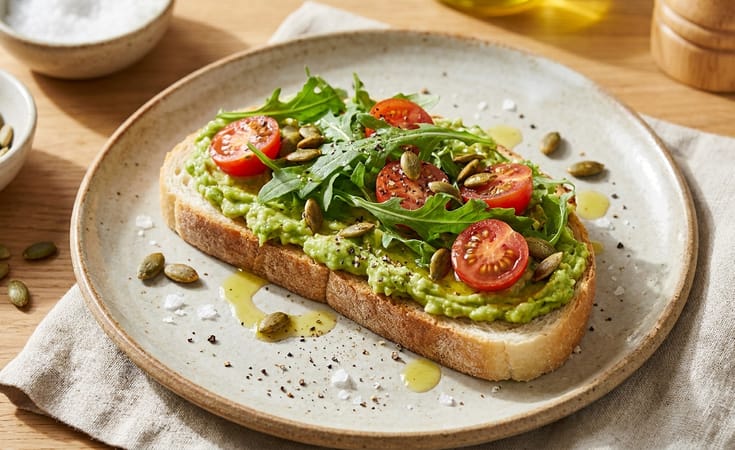
Avocado Toast
355 kcal
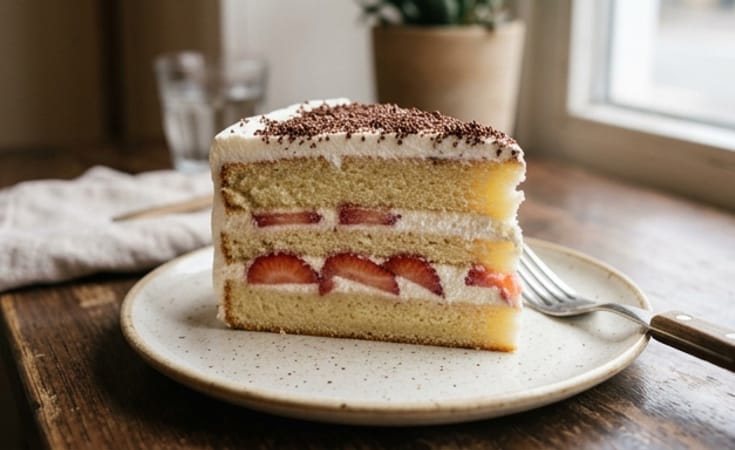
Vanilla Layer Cake with Strawberry, Whipped Cream, and Chocolate Sprinkles
372 kcal
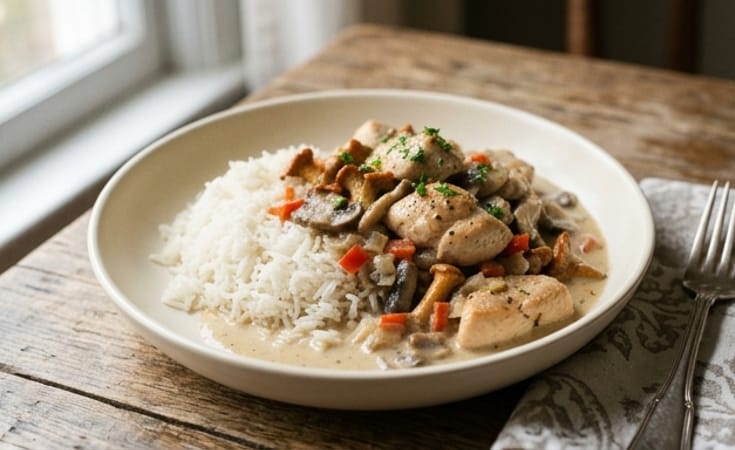
Chicken and Wild Mushroom Velouté with Basmati Rice
470 kcal
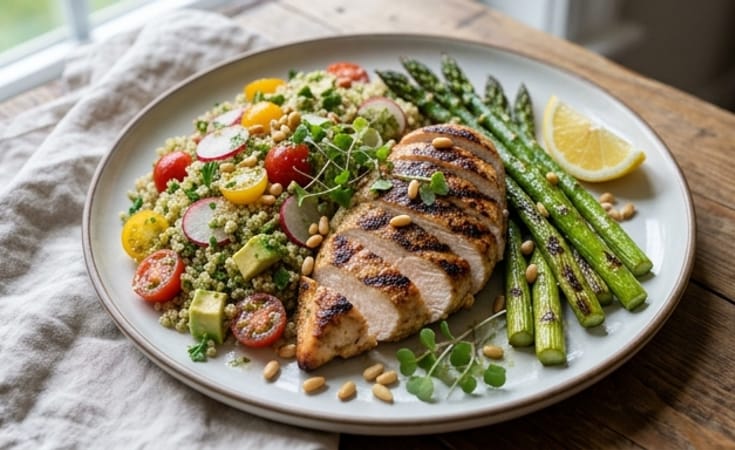
Grilled Chicken Breast with Quinoa, Asparagus, Basil Pesto, and Lemon
655 kcal
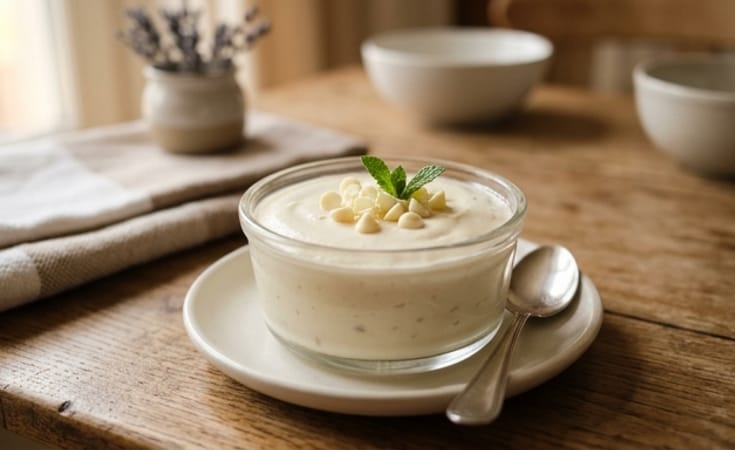
White Chocolate Chip Mousse
970 kcal
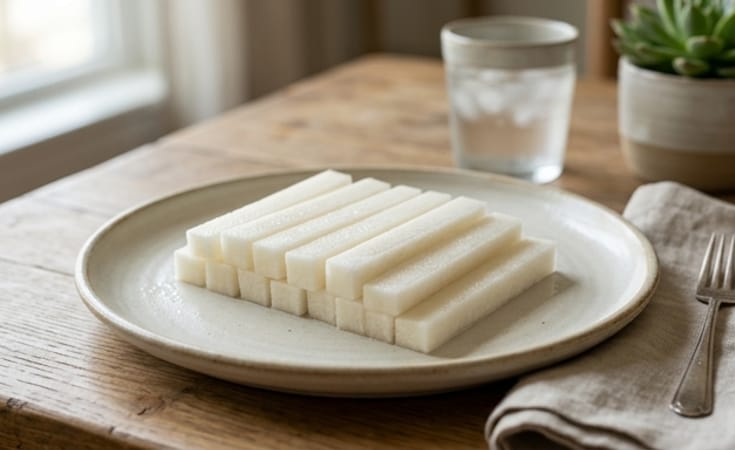
Chilled Jicama Sticks with Crisp Natural Sweetness
68 kcal