

 Silken Butter-Scrambled Eggs
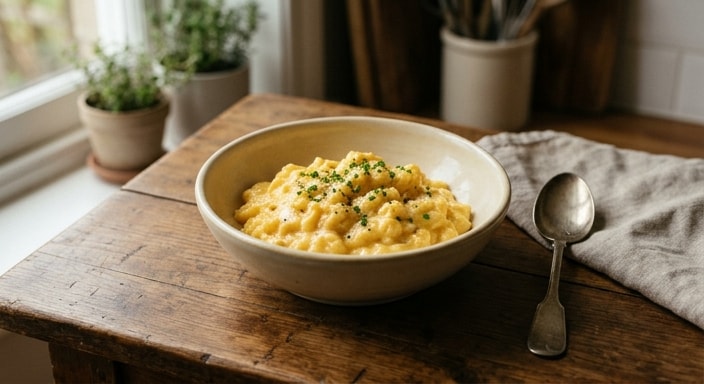
Nutrition Facts
Per 120g serving
% Daily Value based on a 2000 kcal diet
Calories
200 kcal
10% DV
Total Fat
15.0g
23% DV
Monounsaturated Fat6.0g
Polyunsaturated Fat2.5g
Saturated Fat4.5g
Total Carbohydrate
2.0g
1% DV
Sugars1.0g
Protein
13.0g
26% DV
Animal Protein13.0g
About
A simple egg-based dish, likely prepared as a basic omelet or scrambled eggs.
Ingredients
- eggs 100g
- butter or oil 10g
- milk or water 10g
Vitamins & Minerals
Vitamins
| Nutrient | Amount | DV% | Half-life |
|---|---|---|---|
| Choline | 290.0mg | 53% | |
| Vitamin A | 180.0mcg | 20% | |
| Vitamin B1 | 0.1mg | 4% | |
| Vitamin B12 | 1.1mcg | 46% | |
| Vitamin B2 | 0.5mg | 35% | |
| Vitamin B3 | 0.1mg | 1% | |
| Vitamin B5 | 1.4mg | 28% | |
| Vitamin B6 | 0.1mg | 9% | |
| Vitamin B7 | 20.0mcg | 67% | |
| Vitamin B9 | 45.0mcg | 11% | |
| Vitamin D | 2.0mcg | 10% | |
| Vitamin E | 1.2mg | 8% | |
| Vitamin K | 0.4mcg | 0% |
Minerals
| Nutrient | Amount | DV% | Half-life |
|---|---|---|---|
| Calcium | 60.0mg | 6% | |
| Chromium | 1.0mcg | 3% | |
| Copper | 0.1mcg | 0% | |
| Iodine | 24.0mcg | 16% | |
| Iron | 1.8mg | 10% | |
| Magnesium | 12.0mg | 3% | |
| Manganese | 0.0mg | 1% | |
| Molybdenum | 5.0mcg | 11% | |
| Phosphorus | 190.0mg | 27% | |
| Potassium | 140.0mg | 3% | |
| Selenium | 30.0mcg | 55% | |
| Sodium | 180.0mg | 8% | |
| Zinc | 1.3mg | 12% |
Silken Butter-Scrambled Eggs
Headnote
This is the quiet luxury of eggs handled correctly: soft, cohesive curds, a clean dairy richness, and a finish that remains tender rather than dry. With so few ingredients, precision matters; the heat must be controlled, the movement deliberate, and the final texture just set. The result should feel supple on the plate and complete in itself.
Recipe essentials
Dish category: Egg dish
Cuisine or origin: Classic European
Course type: Breakfast or light course
Yield: 1 serving
Serving size: 120 g
Prep time: 2 minutes
Cook time: 4 minutes
Total time: 6 minutes
Difficulty: Easy
Equipment
Small mixing bowl
Fork or whisk
Small nonstick skillet, 20 cm
Silicone spatula
Ingredients
Eggs, 100 g
Butter or oil, 10 g
Milk or water, 10 g
Method
Plating and serving
Transfer immediately to a warm plate, shaping the eggs into a loose mound rather than spreading them thinly. Serve at once while the texture remains silken and the surface glossy.
Professional notes
Low heat is non-negotiable; high heat destroys the delicate curd. Remove the eggs before they appear fully set, as carryover cooking will complete them. The finished texture should be soft enough to fold, yet cohesive enough to hold its form on the plate.
KetoLow-carbVegetarianGluten-freeBalanced
More dishes from United States
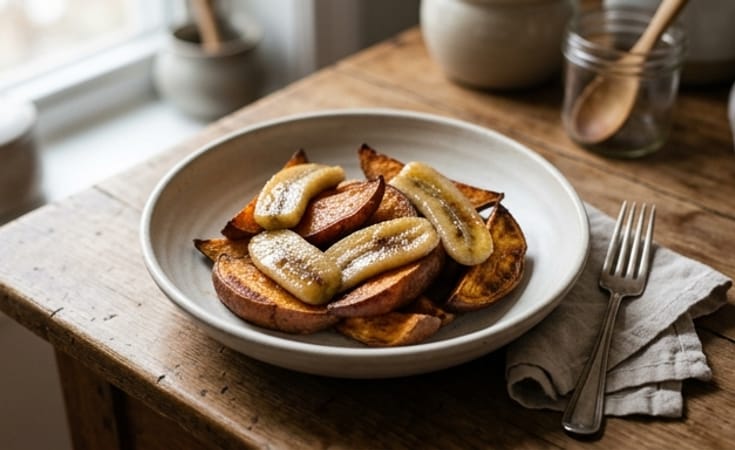
Caramelized Banana with Roasted Sweet Potato
291 kcal
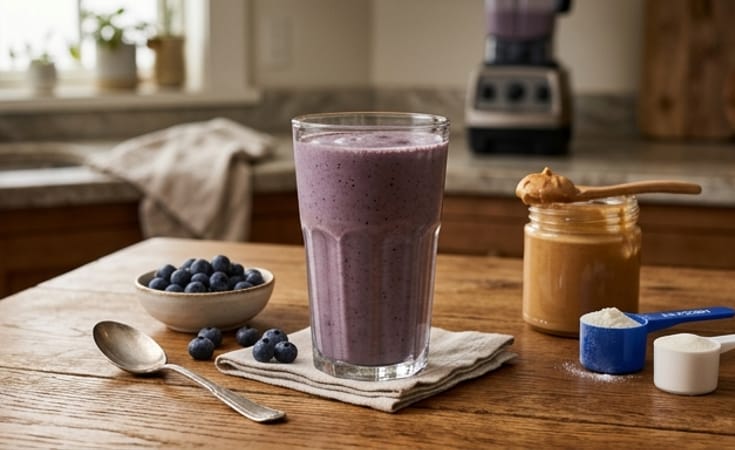
Blueberry Peanut Butter Protein Shake with Collagen
290 kcal
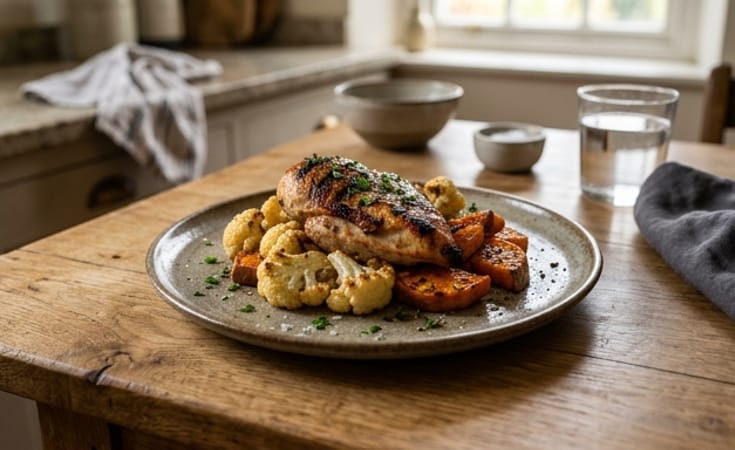
Charred Chicken Supreme with Sweet Potato and Cauliflower
341 kcal
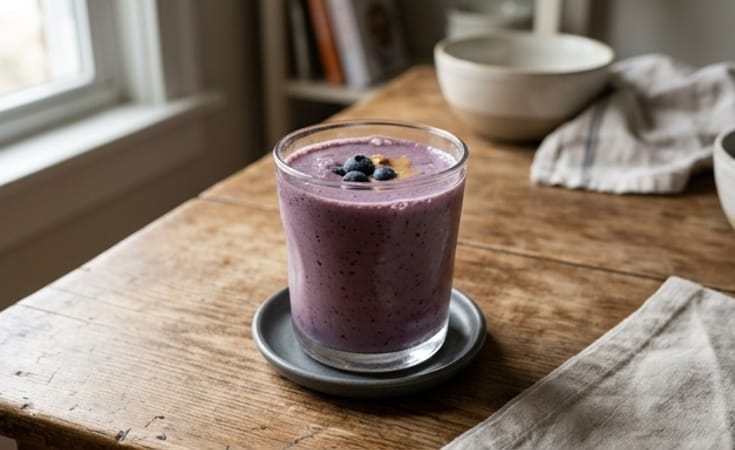
Blueberry Peanut Butter Whey Shake
220 kcal
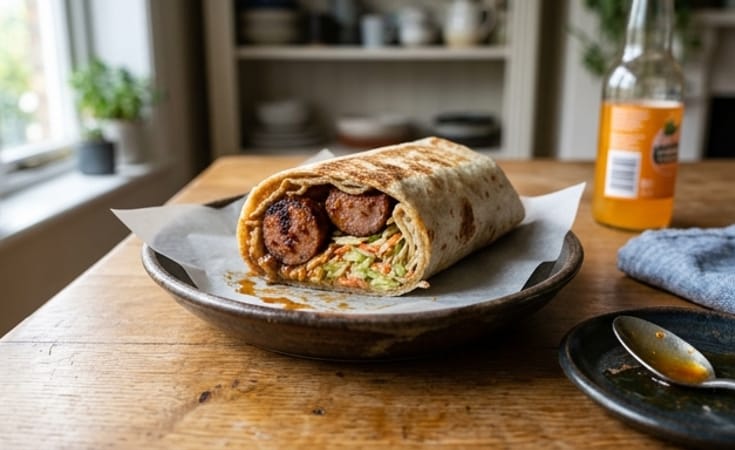
Grilled Sausage Wrap with Cabbage Slaw and Orange Soda Glaze
760 kcal
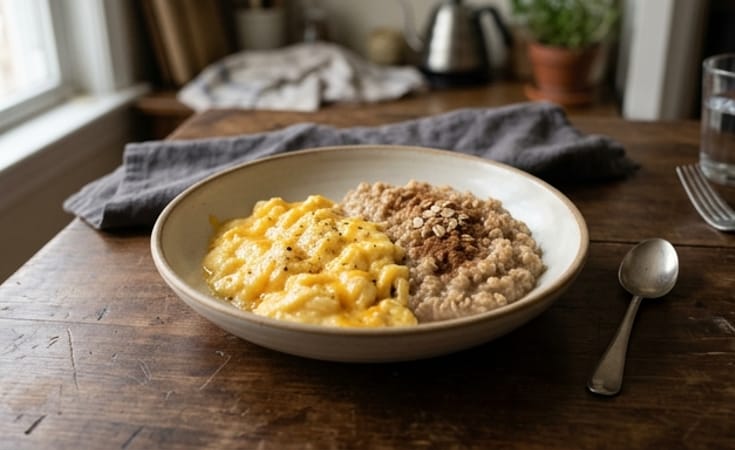
Silken Egg White Scramble with Cheddar and Cinnamon Oat Porridge
273 kcal