

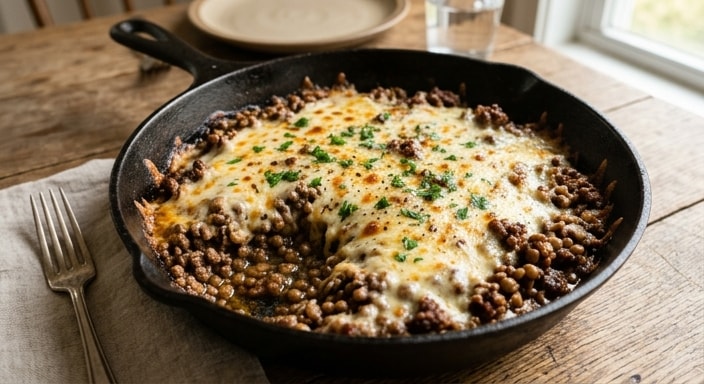
 Cheesy Beef and Lentil Skillet
Logged by @test
Nutrition Facts
Per 450g serving
% Daily Value based on a 2000 kcal diet
Calories
720 kcal
36% DV
Total Fat
42.0g
65% DV
Total Carbohydrate
28.0g
9% DV
Protein
55.0g
100% DV
About
A hearty skillet of browned beef simmered with tender lentils and finished with melted cheese. It’s a savory, protein-rich comfort dish with a creamy, satisfying finish.
Cheesy Beef and Lentil Skillet
Headnote
This is a direct, savory skillet dish built on concentration rather than ornament. Beef gives depth, lentils provide structure, and cheese binds the whole into a unified, molten finish. The result should be hearty but controlled, with a clean cut, a supple interior, and a browned top.
Recipe essentials
Equipment
Ingredients
Main component
Method
Plating and serving
Serve directly from the skillet or turn onto a warm plate in a compact mound. The finished dish should hold together softly, with the cheese forming a glossy cap over the beef and lentils.
Professional notes
Gluten-freeBalanced
More dishes from Estonia

Chicken and Rice with Crisped Chicken and Steamed Grain
520 kcal
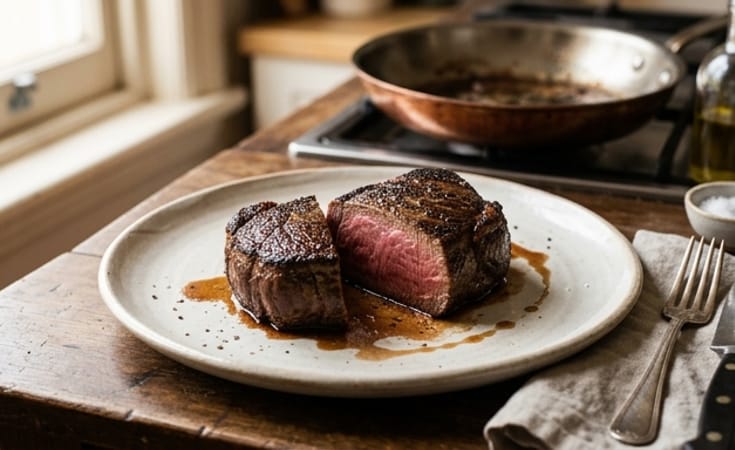
Seared Beef Portion with Natural Pan Jus
500 kcal

Orchard Fruit Bowl with Assorted Fresh Fruit
180 kcal

Swedish Meatballs with Cream Sauce
420 kcal

Bacon Onion Cheeseburger with Loaded Cheddar Fries
1620 kcal

Chicken and Tomato Pizza with Mozzarella
1035 kcal