

 Trio of Mezze with Warm White Bread
Logged by @hokkaido
Nutrition Facts
Per 330g serving
% Daily Value based on a 2000 kcal diet
Calories
520 kcal
26% DV
Total Fat
26.0g
40% DV
Monounsaturated Fat11.0g
Polyunsaturated Fat8.0g
Saturated Fat3.5g
Total Carbohydrate
58.0g
19% DV
Fiber10.0g
Starch40.0g
Sugars4.0g
Protein
15.0g
30% DV
Plant Protein15.0g
About
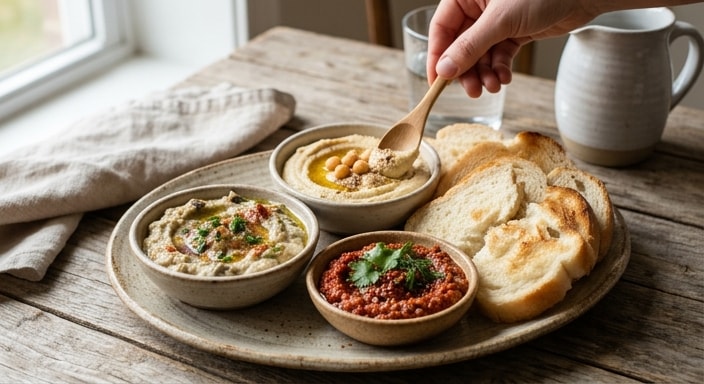
A small mezze-style serving of babaganoush, hummus, adjica, and soft white bread.
Ingredients
- babaganoush 80g
- hummus 80g
- adjica 30g
- white fluffy bread 140g
Vitamins & Minerals
Vitamins
| Nutrient | Amount | DV% | Half-life |
|---|---|---|---|
| Choline | 35.0mg | 6% | |
| Vitamin A | 180.0mcg | 20% | |
| Vitamin B1 | 0.3mg | 29% | |
| Vitamin B2 | 0.2mg | 14% | |
| Vitamin B3 | 3.5mg | 22% | |
| Vitamin B5 | 0.9mg | 18% | |
| Vitamin B6 | 0.3mg | 15% | |
| Vitamin B7 | 4.0mcg | 13% | |
| Vitamin B9 | 90.0mcg | 23% | |
| Vitamin C | 12.0mg | 13% | |
| Vitamin E | 3.0mg | 20% | |
| Vitamin K | 18.0mcg | 15% |
Minerals
| Nutrient | Amount | DV% | Half-life |
|---|---|---|---|
| Calcium | 90.0mg | 9% | |
| Chromium | 4.0mcg | 11% | |
| Copper | 0.3mcg | 0% | |
| Iodine | 5.0mcg | 3% | |
| Iron | 3.2mg | 18% | |
| Magnesium | 55.0mg | 13% | |
| Manganese | 0.9mg | 39% | |
| Molybdenum | 12.0mcg | 27% | |
| Phosphorus | 180.0mg | 26% | |
| Potassium | 420.0mg | 9% | |
| Selenium | 18.0mcg | 33% | |
| Sodium | 720.0mg | 31% | |
| Zinc | 1.8mg | 16% |
Trio of Mezze with Warm White Bread
A restrained mezze plate lives or dies by balance: smoke, cream, heat, and softness must meet without crowding one another. Here, babaganoush, hummus, and adjica are arranged as distinct voices, while white bread provides the necessary tenderness and carry. The result should feel generous, clean, and composed.
Dish category: Mezze platter
Cuisine or origin: Eastern Mediterranean and Caucasian-inspired
Course type: Starter or shared small plate
Yield: 1 platter
Serving size: 330 g
Prep time: 10 minutes
Cook time: 3 minutes
Total time: 13 minutes
Difficulty: Easy
Small serving platter
Small spoon
Bread knife
Toaster or dry skillet
Three small serving wells or ramekins, if desired
Babaganoush 80 g
Hummus 80 g
Adjica 30 g
White fluffy bread 140 g
1. Bring the babaganoush, hummus, and adjica to room temperature for 10 minutes so their textures soften and their flavors open. The dips should be supple, not cold and firm.
2. Warm the white fluffy bread for 2 to 3 minutes in a toaster or in a dry skillet over medium heat, turning once if using the skillet. The bread should be lightly warmed through, soft in the center, and just faintly crisp at the edges without coloring deeply.
3. Spoon the babaganoush into one section of the serving platter and smooth it into a low oval. Place the hummus beside it and shape it into a second neat mound or shallow sweep. Spoon the adjica into a third, smaller pool, keeping its edge clean and distinct.
4. Slice the warm bread into even pieces if needed, then arrange it alongside the dips in a controlled line or fan. The plate should read as three clear elements, not a mixture.
Serve immediately while the bread is warm and the dips remain supple. Present the platter with the dips separated but close enough for easy movement from one to the next. The final composition should be balanced, with the bread acting as a soft, neutral frame.
Keep the dips distinct in shape and placement; visual clarity is part of the dish’s discipline.
Warm bread is essential, but it must remain tender. Overtoasting will disrupt the balance.
If the adjica is particularly assertive, keep its portion compact so it sharpens the plate rather than dominating it.
Recipe essentials
Equipment
Ingredients
Mezze components
Bread
Method
Plating and serving
Serve immediately while the bread is warm and the dips remain supple. Present the platter with the dips separated but close enough for easy movement from one to the next. The final composition should be balanced, with the bread acting as a soft, neutral frame.
Professional notes
VegetarianMediterraneanBalanced
More dishes from Sweden
Avocado Toast
355 kcal
Vanilla Layer Cake with Strawberry, Whipped Cream, and Chocolate Sprinkles
372 kcal
Chicken and Wild Mushroom Velouté with Basmati Rice
470 kcal
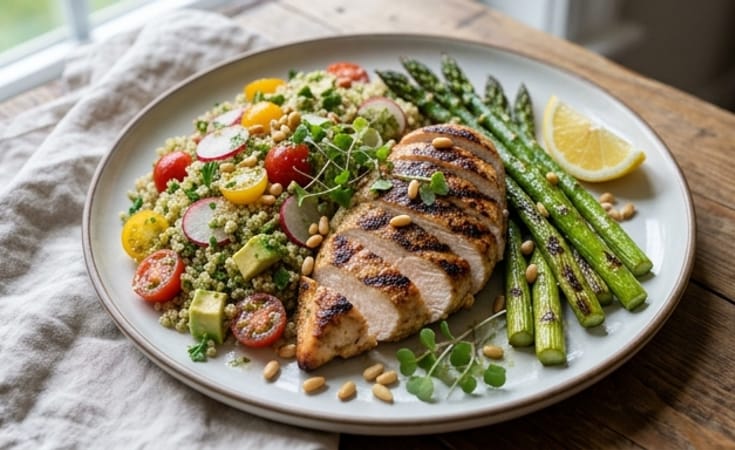
Grilled Chicken Breast with Quinoa, Asparagus, Basil Pesto, and Lemon
655 kcal
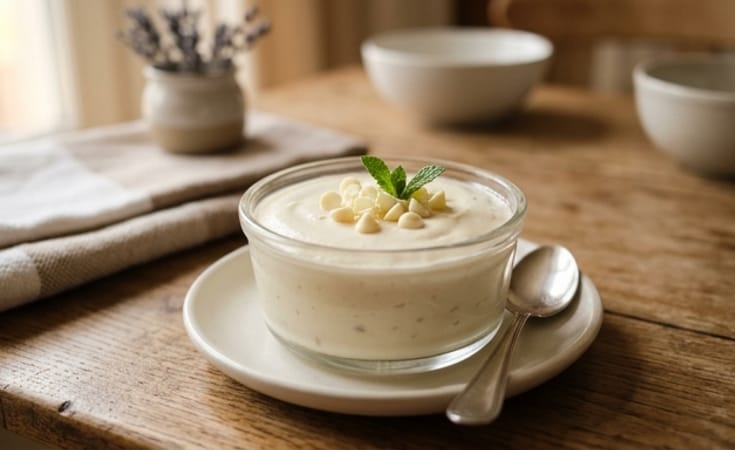
White Chocolate Chip Mousse
970 kcal
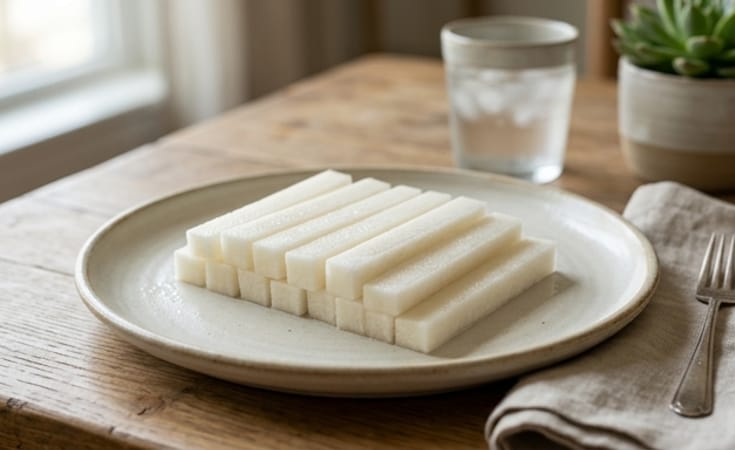
Chilled Jicama Sticks with Crisp Natural Sweetness
68 kcal