

 Roasted Glazed Ham with Mustard, Honey, and Clove
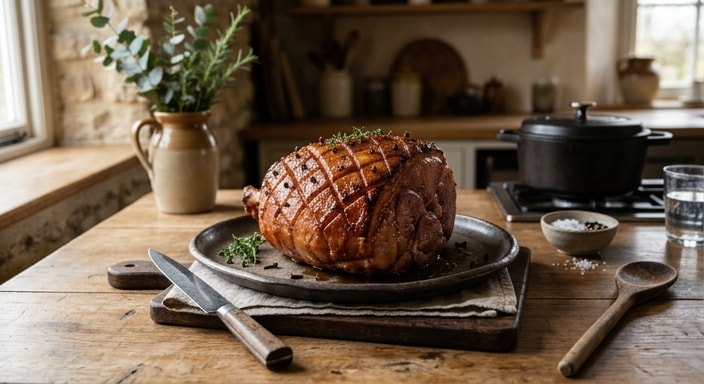
Logged by @kaylajdrzejewska
Nutrition Facts
Per 820g serving
% Daily Value based on a 2000 kcal diet
Calories
1960 kcal
98% DV
Total Fat
138.0g
100% DV
Monounsaturated Fat70.0g
Polyunsaturated Fat14.0g
Saturated Fat48.0g
Trans Fat1.8g
Total Carbohydrate
30.0g
10% DV
Starch2.0g
Sugars28.0g
Protein
150.0g
100% DV
Animal Protein150.0g
About
A large roasted ham portion with a sweet glaze and visible fat cap. High in protein and fat, with modest carbohydrates from the glaze and likely high sodium.
Vitamins & Minerals
Vitamins
| Nutrient | Amount | DV% | Half-life |
|---|---|---|---|
| Choline | 620.0mg | 113% | |
| Vitamin A | 8.0mcg | 1% | |
| Vitamin B1 | 5.4mg | 450% | |
| Vitamin B12 | 6.8mcg | 283% | |
| Vitamin B2 | 1.9mg | 146% | |
| Vitamin B3 | 52.0mg | 325% | |
| Vitamin B5 | 7.5mg | 150% | |
| Vitamin B6 | 4.6mg | 271% | |
| Vitamin B7 | 14.0mcg | 47% | |
| Vitamin B9 | 18.0mcg | 5% | |
| Vitamin D | 1.6mcg | 8% | |
| Vitamin E | 0.9mg | 6% | |
| Vitamin K | 3.0mcg | 3% |
Minerals
| Nutrient | Amount | DV% | Half-life |
|---|---|---|---|
| Calcium | 95.0mg | 10% | |
| Copper | 180.0mcg | 20% | |
| Iron | 7.8mg | 43% | |
| Magnesium | 170.0mg | 40% | |
| Phosphorus | 1500.0mg | 214% | |
| Potassium | 2300.0mg | 49% | |
| Selenium | 210.0mcg | 382% | |
| Sodium | 5200.0mg | 226% | |
| Zinc | 17.5mg | 159% |
Roasted Glazed Ham with Mustard, Honey, and Clove
Headnote
This is a ham of deep savor and polished sweetness, built for a proper table rather than a casual one. The fat cap bastes the meat as it roasts, while a restrained glaze of brown sugar, honey, mustard, clove, and black pepper gives the surface a lacquered finish without obscuring the ham’s natural salt and depth. The result should be glossy, carved cleanly, and balanced between richness and precision.
Recipe essentials
Dish category: Roasted main course
Cuisine or origin: Classic European-inspired
Course type: Main course
Yield: 4 servings
Serving size: 205 g
Prep time: 20 minutes
Cook time: 75 minutes
Total time: 95 minutes
Difficulty: Moderate
Equipment
Roasting tray
Wire rack
Small saucepan
Pastry brush
Sharp carving knife
Instant-read thermometer
Foil
Ingredients
Ham, bone-in or boneless with fat cap, 820 g
Salt, 8 g
Black pepper, 2 g
Clove, ground, 1 g
Mustard, 35 g
Brown sugar, 45 g
Honey, 30 g
Oil, 10 g
Method
Plating and serving
Arrange the slices in a slight overlap on a warmed platter. Spoon any remaining glaze lightly over the top so the surface shines without becoming heavy. Serve the ham with its caramelized edge visible and the meat cut cleanly across the grain.
Professional notes
A shallow score on the fat cap encourages even rendering and a finer finish. Keep the glaze warm and fluid so it brushes on in a thin, even film. Do not overcook; ham should remain moist and supple, with the glaze set and the exterior burnished, not darkened beyond control.
Low-carbGluten-freeDairy-free
More dishes from Poland
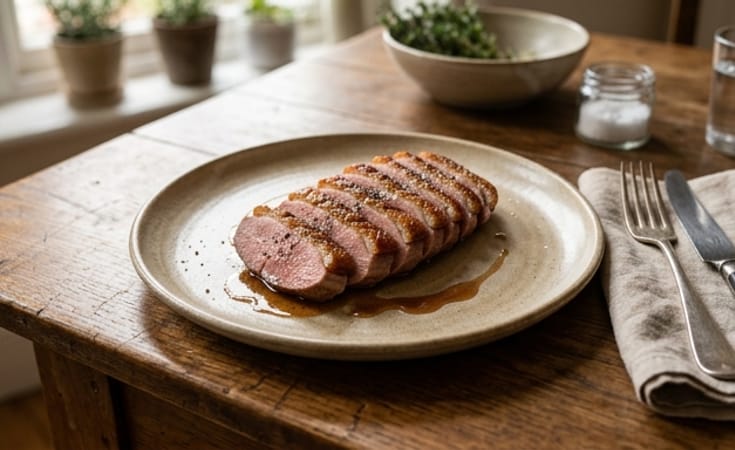
Roasted Duck Breast with Crisp Skin and Rendered Fat
720 kcal
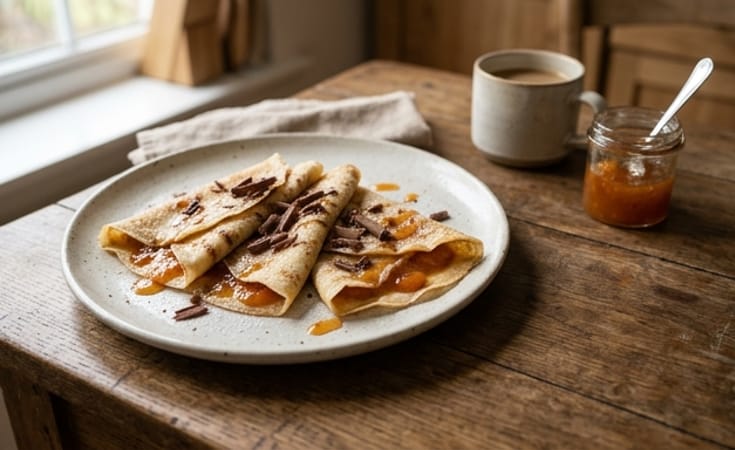
French Crêpes with Apricot-Style Orange Jam, Apple, and Milk Chocolate
492 kcal
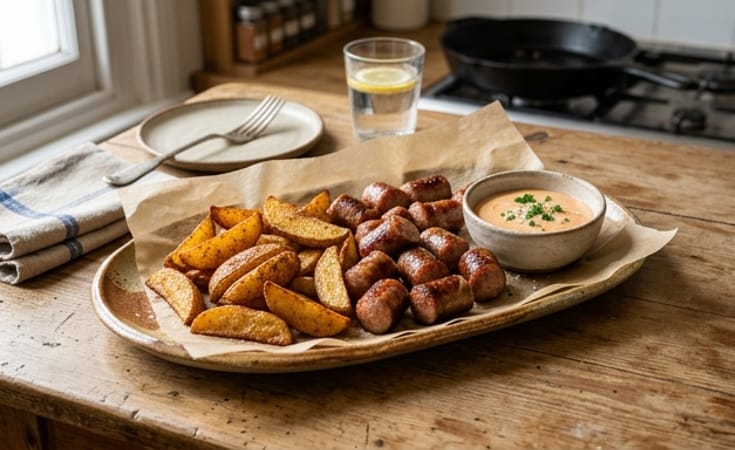
Rustic Potato Wedges with Roast Sausage and Paprika Dipping Sauce
2140 kcal
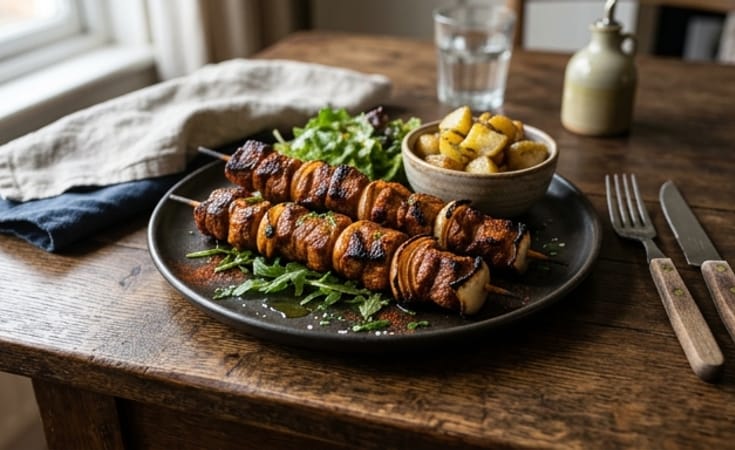
Paprika Pork Brochettes with Sweet Onion
420 kcal
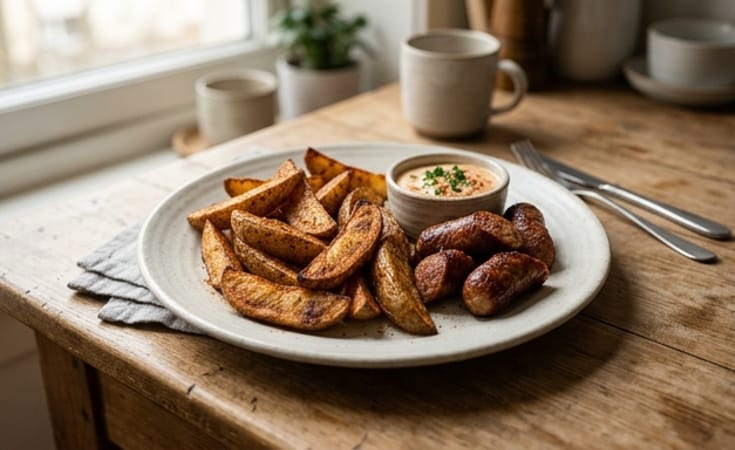
Crisp Baked Potato Wedges with Sausage and Paprika Cream
2120 kcal
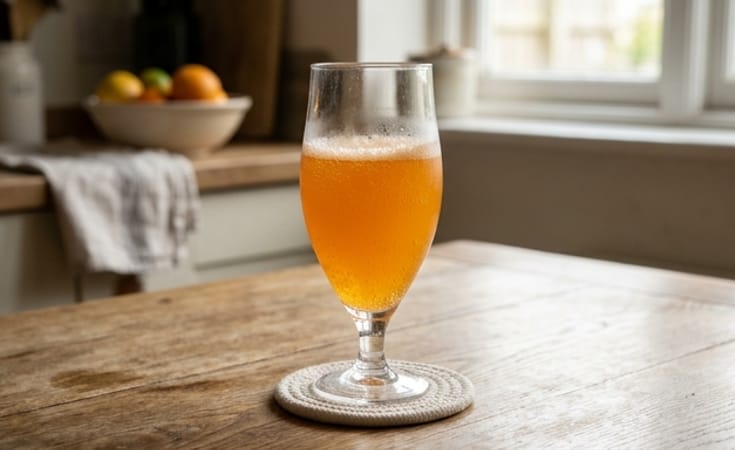
Fanta Orange Soda
105 kcal