

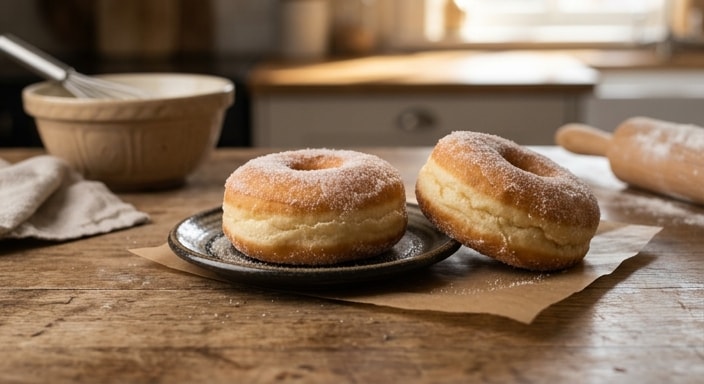
 Sugar-Coated Yeast-Raised Doughnuts
Logged by @leo
Nutrition Facts
Per 72g serving
% Daily Value based on a 2000 kcal diet
Calories
250 kcal
13% DV
Total Fat
12.0g
18% DV
Monounsaturated Fat6.4g
Polyunsaturated Fat2.5g
Saturated Fat3.0g
Trans Fat0.1g
Total Carbohydrate
31.0g
10% DV
Fiber1.0g
Starch17.0g
Sugars13.0g
Protein
4.0g
8% DV
Animal Protein1.2g
Plant Protein2.8g
About
A plain sugar-coated raised donut with moderate calories, high refined carbohydrate content, and moderate fat from frying.
Vitamins & Minerals
Vitamins
| Nutrient | Amount | DV% | Half-life |
|---|---|---|---|
| Choline | 18.0mg | 3% | |
| Vitamin A | 35.0mcg | 4% | |
| Vitamin B1 | 0.2mg | 15% | |
| Vitamin B12 | 0.1mcg | 5% | |
| Vitamin B2 | 0.1mg | 9% | |
| Vitamin B3 | 1.6mg | 10% | |
| Vitamin B5 | 0.3mg | 7% | |
| Vitamin B6 | 0.0mg | 2% | |
| Vitamin B7 | 3.0mcg | 10% | |
| Vitamin B9 | 45.0mcg | 11% | |
| Vitamin D | 0.2mcg | 1% | |
| Vitamin E | 1.2mg | 8% | |
| Vitamin K | 6.0mcg | 5% |
Minerals
| Nutrient | Amount | DV% | Half-life |
|---|---|---|---|
| Calcium | 28.0mg | 3% | |
| Copper | 60.0mcg | 7% | |
| Iron | 1.4mg | 8% | |
| Magnesium | 10.0mg | 2% | |
| Phosphorus | 55.0mg | 8% | |
| Potassium | 70.0mg | 1% | |
| Selenium | 8.0mcg | 15% | |
| Sodium | 180.0mg | 8% | |
| Zinc | 0.4mg | 4% |
Sugar-Coated Yeast-Raised Doughnuts
Headnote
These doughnuts are built for lightness: a supple yeast dough, fried to a pale gold, then finished in a fine sugar coat while still warm. The structure should be tender and aerated, never heavy, with a clean sweetness that reads immediately on the palate. Precision in fermentation and frying is what gives the doughnut its lift and its grace.
Recipe essentials
Dish category: Sweet fried dough
Cuisine or origin: Classic European-style confection
Course type: Snack or dessert
Yield: 4 doughnuts
Serving size: 1 doughnut, about 72 g
Prep time: 20 minutes
Cook time: 12 minutes
Total time: 2 hours 20 minutes
Difficulty: Intermediate
Equipment
Mixing bowl
Digital scale
Dough scraper
Rolling pin
Small round cutter
Tray lined with parchment
Deep heavy saucepan, 18 cm
Thermometer
Slotted spoon
Wire rack
Ingredients
Dough
Frying and finish
Method
Plating and serving
Arrange the doughnuts in a single layer, with the sugar coating intact and visible. Serve warm, when the crumb is at its most tender and the exterior still carries a slight crispness beneath the sugar.
Professional notes
Keep the dough soft; excess flour will tighten the crumb.
Oil temperature is decisive: too cool and the doughnuts absorb fat, too hot and they color before the center is set.
Sugar adheres best when applied immediately after draining, while the surface is still warm and dry.
Balanced
More dishes from Sweden
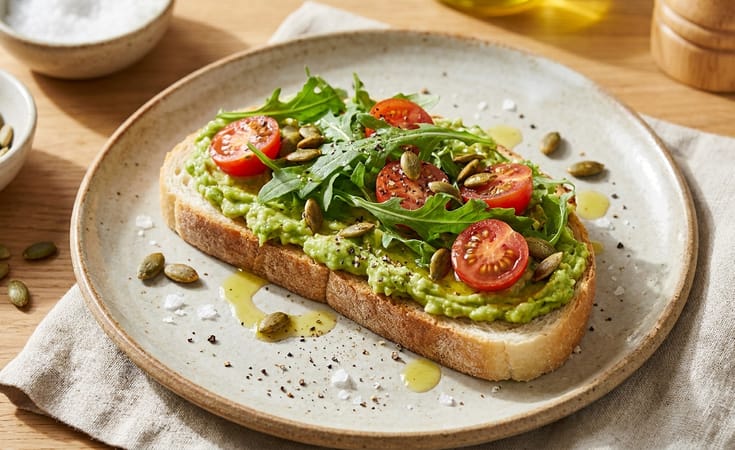
Avocado Toast
355 kcal
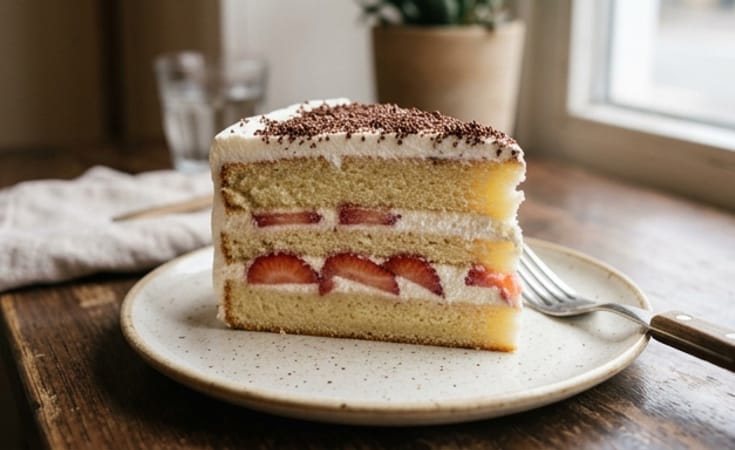
Vanilla Layer Cake with Strawberry, Whipped Cream, and Chocolate Sprinkles
372 kcal
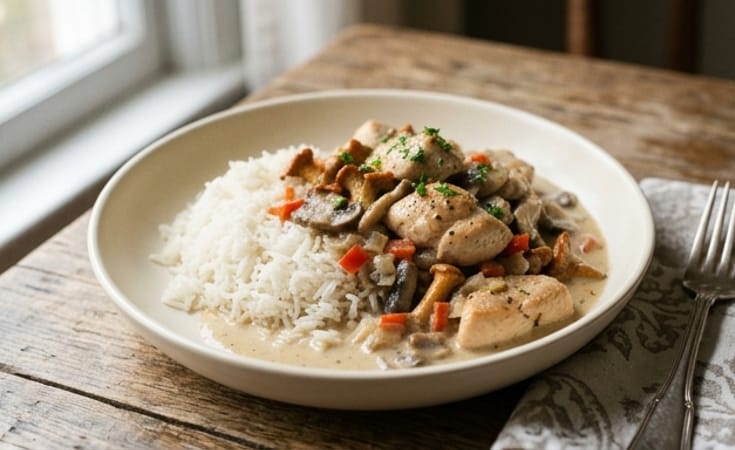
Chicken and Wild Mushroom Velouté with Basmati Rice
470 kcal
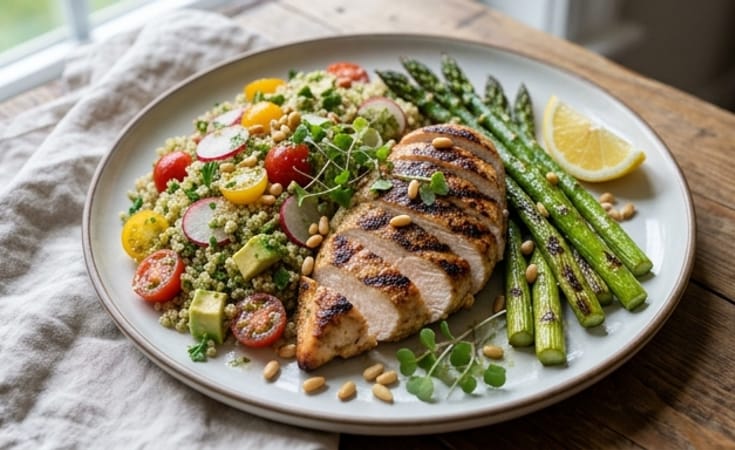
Grilled Chicken Breast with Quinoa, Asparagus, Basil Pesto, and Lemon
655 kcal
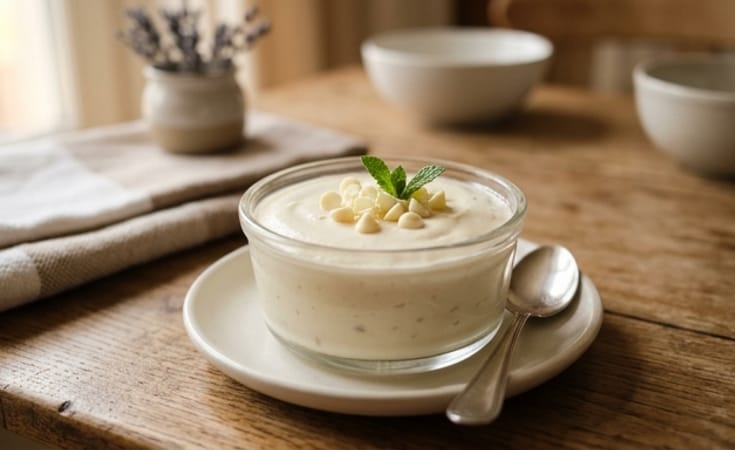
White Chocolate Chip Mousse
970 kcal
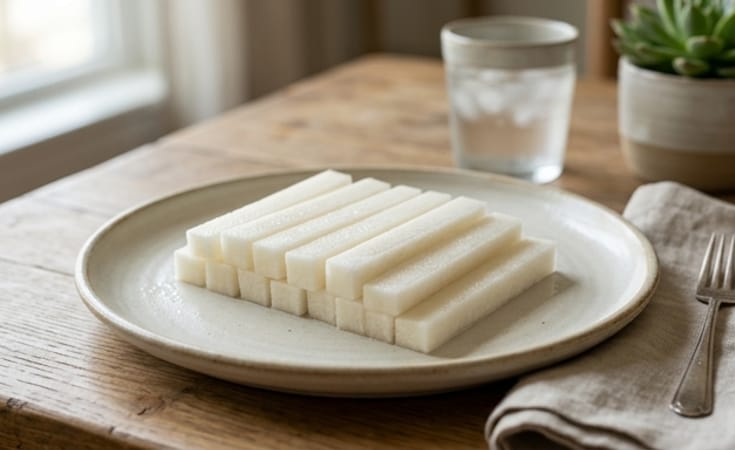
Chilled Jicama Sticks with Crisp Natural Sweetness
68 kcal