

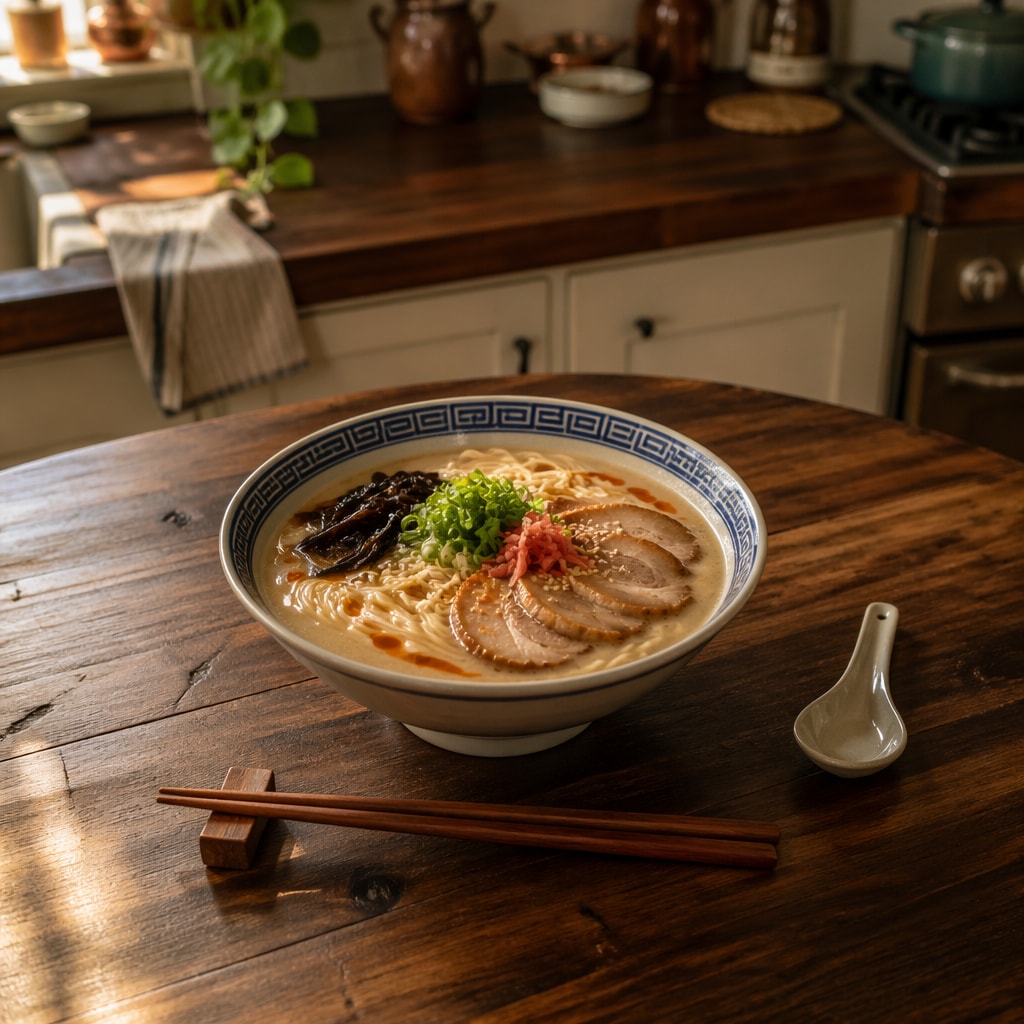
 Tonkotsu Ramen with Chashu, Pickled Ginger, and Chili Oil
Logged by @hokkaido
Nutrition Facts
Per 620g serving
% Daily Value based on a 2000 kcal diet
Calories
760 kcal
38% DV
Total Fat
40.0g
62% DV
Monounsaturated Fat19.0g
Polyunsaturated Fat5.0g
Saturated Fat14.0g
Trans Fat0.2g
Total Carbohydrate
67.0g
22% DV
Fiber4.0g
Starch59.0g
Sugars4.0g
Protein
31.0g
62% DV
Animal Protein24.0g
Plant Protein7.0g
About
A rich pork-broth ramen bowl with wheat noodles and sliced chashu pork. High in sodium and fat, with moderate protein and substantial carbohydrates from the noodles.
Ingredients
Vitamins & Minerals
Vitamins
| Nutrient | Amount | DV% | Half-life |
|---|---|---|---|
| Choline | 78.0mg | 14% | |
| Vitamin A | 35.0mcg | 4% | |
| Vitamin B1 | 0.6mg | 46% | |
| Vitamin B12 | 0.7mcg | 29% | |
| Vitamin B2 | 0.4mg | 32% | |
| Vitamin B3 | 6.8mg | 43% | |
| Vitamin B5 | 1.4mg | 28% | |
| Vitamin B6 | 0.4mg | 25% | |
| Vitamin B7 | 7.0mcg | 23% | |
| Vitamin B9 | 95.0mcg | 24% | |
| Vitamin C | 4.5mg | 5% | |
| Vitamin D | 0.3mcg | 2% | |
| Vitamin E | 1.8mg | 12% | |
| Vitamin K | 18.0mcg | 15% |
Minerals
| Nutrient | Amount | DV% | Half-life |
|---|---|---|---|
| Calcium | 85.0mg | 9% | |
| Copper | 220.0mcg | 24% | |
| Iron | 3.2mg | 18% | |
| Magnesium | 48.0mg | 11% | |
| Phosphorus | 290.0mg | 41% | |
| Potassium | 540.0mg | 11% | |
| Selenium | 28.0mcg | 51% | |
| Sodium | 2100.0mg | 91% | |
| Zinc | 2.7mg | 25% |
Tonkotsu Ramen with Chashu, Pickled Ginger, and Chili Oil
Headnote
This is a bowl built on depth, clarity, and control: a milky pork broth, supple noodles, and chashu arranged with precision. Pickled ginger lifts the richness, while chili oil and sesame seed give the finish heat, fragrance, and quiet texture. Every element must remain distinct, yet the bowl should eat as one complete expression.
Recipe essentials
Dish category: Noodle soup
Cuisine or origin: Japanese
Course type: Main course
Yield: 1 bowl
Serving size: 620 g
Prep time: 10 minutes
Cook time: 5 minutes
Total time: 15 minutes
Difficulty: Intermediate
Equipment
1 large saucepan or ramen pot
1 small saucepan for reheating broth and noodles
1 fine strainer or spider
1 ladle
1 serving bowl, 650 g capacity minimum
1 cutting board
1 sharp knife
Ingredients
Broth and noodles
Toppings
Method
Plating and serving
Serve in a deep bowl with the chashu partially exposed, the green onion concentrated at the crown, and the chili oil drifting across the surface. The finished bowl should feel rich but composed, with brightness and heat cutting through the broth’s weight.
Professional notes
Keep the broth hot enough to carry aroma, but never aggressively boiling at the table. The noodle must be drained well before assembly so the broth stays concentrated. The pickled ginger should remain a finishing accent, not a dominant note.
Balanced
More dishes from Sweden
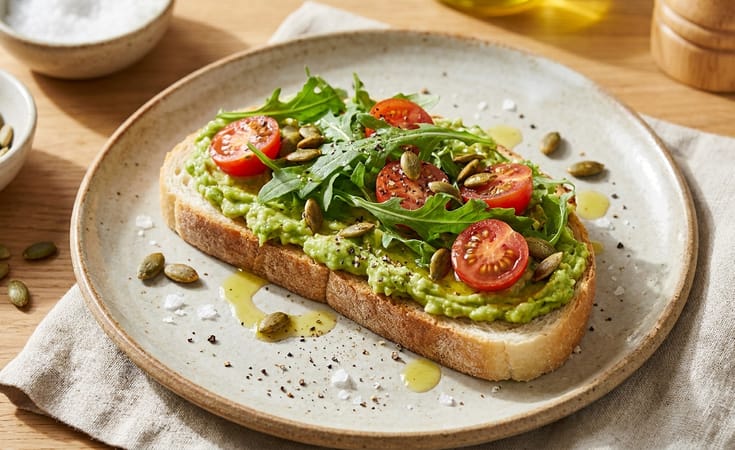
Avocado Toast
355 kcal
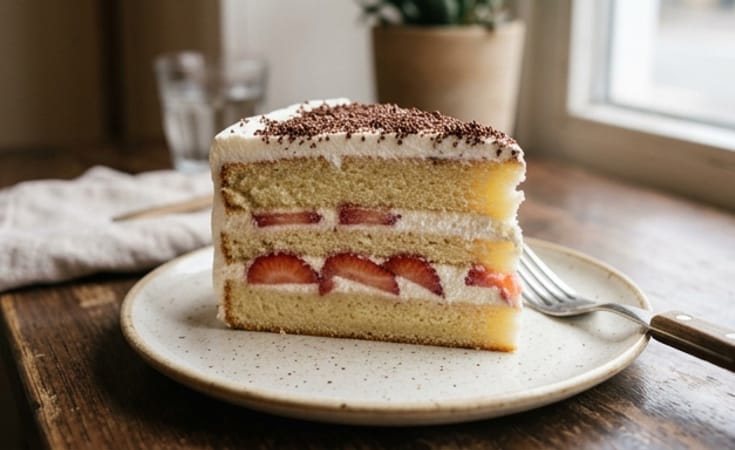
Vanilla Layer Cake with Strawberry, Whipped Cream, and Chocolate Sprinkles
372 kcal
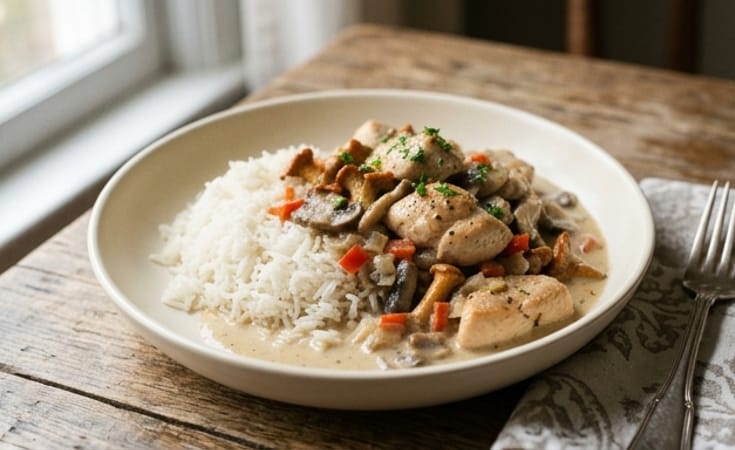
Chicken and Wild Mushroom Velouté with Basmati Rice
470 kcal
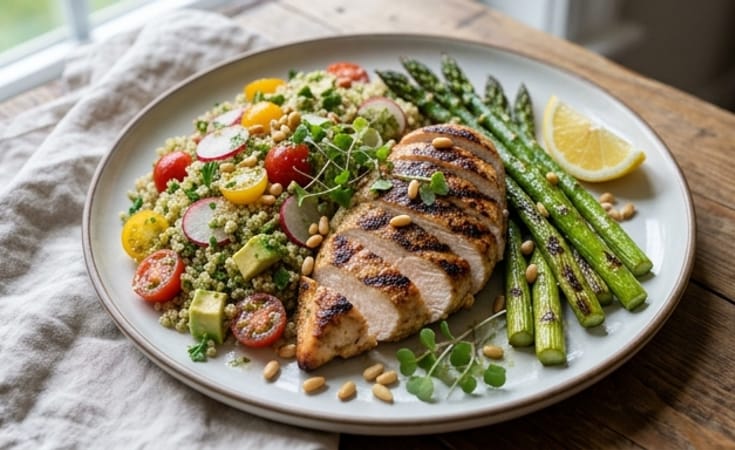
Grilled Chicken Breast with Quinoa, Asparagus, Basil Pesto, and Lemon
655 kcal
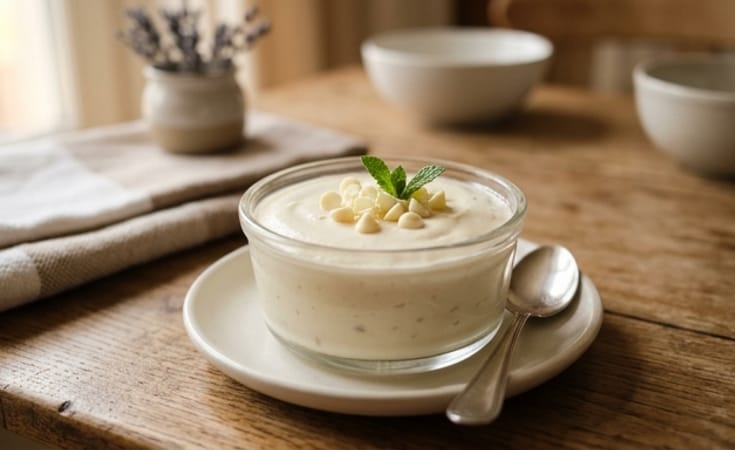
White Chocolate Chip Mousse
970 kcal
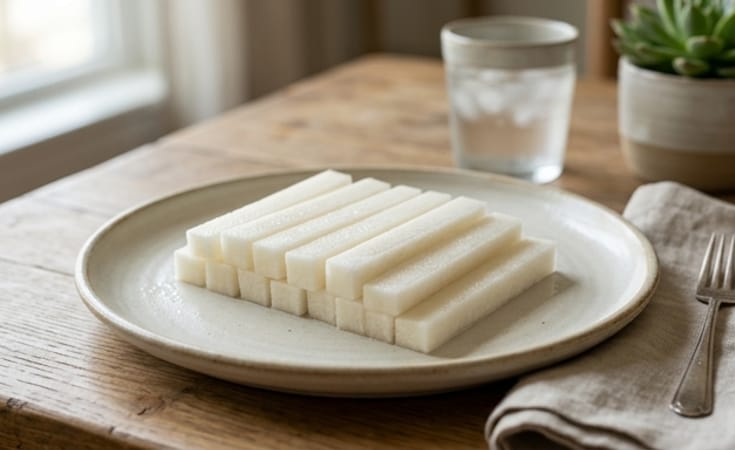
Chilled Jicama Sticks with Crisp Natural Sweetness
68 kcal